
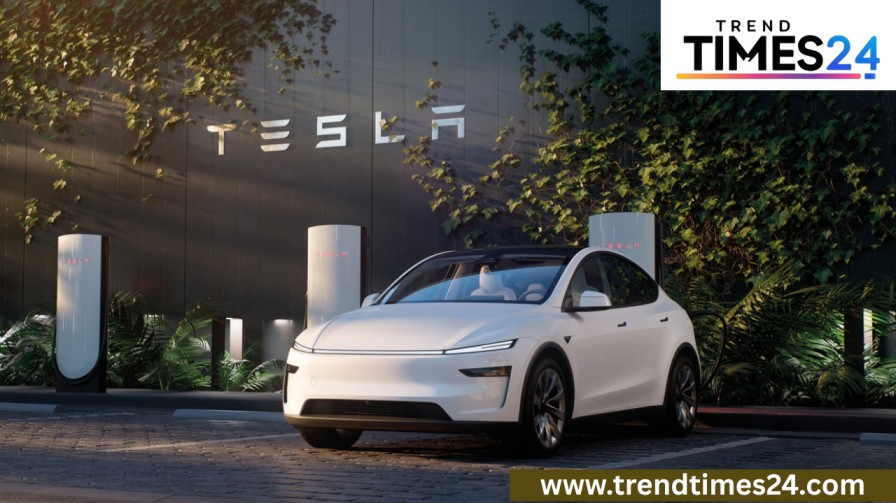
Tesla’s long-awaited entry into India is finally gathering pace. The electric vehicle giant led by Elon Musk is in advanced discussions with the Government of Gujarat to set up its first Indian manufacturing facility. Sources within India’s Ministry of Commerce have confirmed that Tesla’s investment proposal aligns with the government’s new electric vehicle manufacturing policy.
If talks succeed, Gujarat could become Tesla’s production base for both domestic sales and exports to Southeast Asia and Africa. The proposed investment could exceed 3 billion USD and create thousands of high-skill jobs, reshaping India’s position in the global EV supply chain.
A Decade in the Making
Tesla’s journey toward India has been years in the making. The company first explored Indian operations in 2016 but postponed plans due to import duties and infrastructure challenges. The government’s renewed focus on electric mobility under the Faster Adoption and Manufacturing of Hybrid and Electric Vehicles (FAME) scheme has now reopened the door.
According to industry insiders, Tesla executives met with senior officials in New Delhi earlier this year. The discussion focused on incentives for local manufacturing, battery production, and charging networks. Gujarat, with its strong industrial base and proximity to ports, has emerged as the preferred location.
Government’s Push for Green Mobility
The Indian government has been aggressively encouraging global automakers to manufacture locally. Its new EV manufacturing scheme, introduced in 2025, offers tax benefits and import duty relief for companies that commit to local production. This policy has already attracted interest from major automakers, and Tesla’s participation would mark a major validation of India’s EV policy.
Union Minister for Commerce Piyush Goyal stated that negotiations with Tesla are “constructive and promising.” While no formal announcement has been made, officials indicate that a framework for land allocation and infrastructure support is under review. The Gujarat Industrial Development Corporation (GIDC) has reportedly identified potential sites near Sanand, a well-known auto hub.
Tesla’s Strategic Advantage
For Tesla, India represents a massive opportunity. With rising fuel prices and a growing middle class, demand for affordable electric vehicles is soaring. India’s EV market is expected to reach 20 billion USD by 2030, and domestic battery manufacturing is improving. Establishing a factory in India could help Tesla lower costs, qualify for local subsidies, and compete with brands like Tata Motors, Hyundai, and BYD.
Analysts note that Gujarat’s ports and highway connectivity make it ideal for exporting right-hand-drive vehicles to global markets. The state’s track record with industrial projects — including Maruti Suzuki and MG Motors — gives Tesla an experienced ecosystem to build on.
Challenges and Uncertainties
While enthusiasm is high, challenges remain. Tesla has sought lower import duties on EV components, a request that has faced debate within policy circles. The company’s demand for flexible regulations and faster clearance could delay timelines. Moreover, India’s charging infrastructure and battery recycling ecosystem still need rapid expansion.
However, industry experts believe the groundwork for a 2026 operational target is realistic. Tesla has already begun hiring local engineers and suppliers for feasibility assessments. State officials in Gujarat have assured logistical and policy support to ensure the project meets global sustainability standards.
India’s EV Market Momentum
India’s electric vehicle sector is growing faster than ever. More than 15 million EVs are now on the road, and the government aims to achieve 30 percent electric mobility by 2030. Local automakers are investing heavily in production and charging networks, while startups are developing affordable two-wheelers and delivery vehicles.
Tesla’s entry would strengthen this momentum and push local innovation further. By setting up production in India, the company would also stimulate demand for renewable energy and battery recycling industries. This fits perfectly with India’s clean-energy goals and commitment to net-zero emissions by 2070.
Global Reaction
The international community has welcomed Tesla’s growing interest in India. Analysts see it as a strategic diversification away from China, where Tesla faces increasing regulatory and political challenges. Investors view India as the next major EV growth hub, given its young workforce and expanding economy.
Elon Musk’s recent comments on social media confirmed his optimism: “India’s potential for sustainable energy and innovation is unmatched. We’re excited about what’s ahead.” While Musk stopped short of confirming factory details, his statement reinforced that Tesla’s India entry is no longer a question of if, but when.
India’s Context and Broader Impact
For India, hosting Tesla’s manufacturing hub would represent a powerful message to the world — that the nation is ready to lead the next phase of green industrialization. The project could draw additional foreign investment and accelerate domestic EV production. It also aligns with India’s goal to become a global hub for electric mobility and advanced manufacturing.
The Gujarat government has already launched new vocational programs to train youth for EV-related jobs. Experts expect a ripple effect across sectors — from logistics and automation to battery technology and renewable energy. Such partnerships could also inspire Indian firms to adopt global best practices in sustainable manufacturing.
A Step Toward the Future
While Tesla has yet to make a final announcement, the progress of talks signals a turning point for both the company and India’s automotive industry. If finalized, this collaboration could redefine India’s position in the global electric revolution.