The Lithium Triangle: Powering the Green Revolution
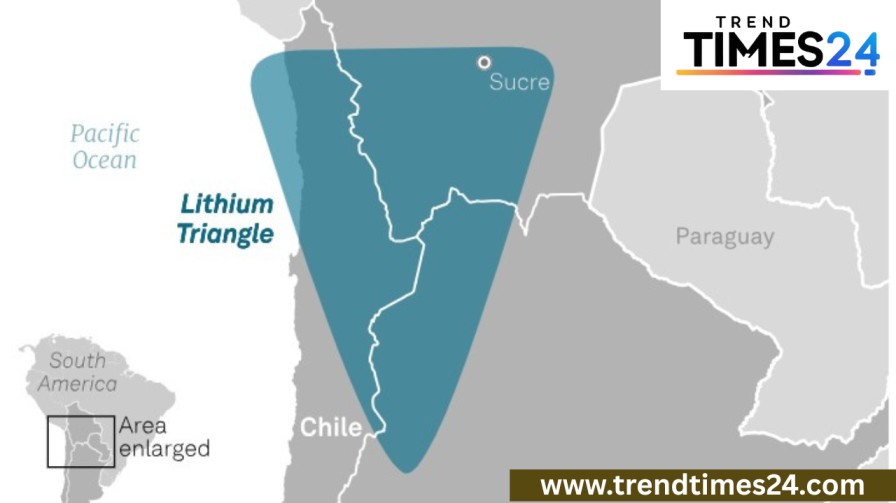
Deep in the Andes Mountains lies the Lithium Triangle, a vast high-altitude region spanning Argentina, Bolivia, and Chile. Together, these three nations hold over 50% of the world’s lithium reserves, making the region the beating heart of the global electric vehicle (EV) and renewable-energy revolution.
In 2025, as the demand for EV batteries and clean-energy storage surges, the Lithium Triangle has become a geopolitical hotspot — a zone where economic opportunity, environmental concern, and technological ambition collide.
Where the Triangle Lies
The Lithium Triangle is formed by three main salt flats, or salars:
-
Salar de Uyuni in Bolivia
-
Salar de Atacama in Chile
-
Salar del Hombre Muerto in Argentina
These salt flats are located thousands of meters above sea level, in some of the driest environments on Earth. Beneath their crusts lie brine deposits rich in lithium, a soft, silvery metal that powers everything from smartphones to Tesla cars.
Scientists estimate that Bolivia alone holds over 20 million tons of lithium, Argentina nearly 19 million tons, and Chile close to 10 million tons. Together, they form a resource triangle that could redefine the future of clean energy.

Why the Lithium Triangle Matters
1. The Backbone of Energy Transition:
Lithium is a key ingredient in lithium-ion batteries used in electric vehicles, solar energy storage, and portable electronics. As nations move toward net-zero carbon goals, lithium has become the new “white gold.”
2. Economic Powerhouse for South America:
Argentina, Chile, and Bolivia stand at a turning point. Efficiently developing these resources could transform their economies — creating jobs, attracting global investment, and reducing dependence on traditional fossil fuels.
3. Strategic Global Interest:
Major powers including the United States, China, and India are eyeing partnerships and investments in the region. The Lithium Triangle is now at the center of a global race for clean-energy dominance.
Country-Wise Outlook
Chile:
Chile remains the most advanced in lithium production. Its Salar de Atacama hosts world-leading operations and efficient extraction systems. The government’s new “National Lithium Strategy” aims to increase domestic value addition and ensure fair revenue distribution.
Argentina:
Argentina is rapidly emerging as an investment magnet. Several projects in the provinces of Catamarca, Jujuy, and Salta are expanding output. However, fluctuating policies and infrastructure gaps remain challenges for scaling production.
Bolivia:
Bolivia has the world’s largest known lithium reserves but struggles with extraction technology and investment limitations. Its focus on state-controlled development has slowed commercial progress, though partnerships are now being explored to unlock its vast potential.
Environmental and Social Challenges
The Lithium Triangle’s promise comes with pressing concerns:
-
Water Scarcity: Extracting lithium from brines consumes enormous quantities of water — a serious issue in desert regions already facing drought.
-
Impact on Indigenous Communities: Local populations depend on fragile water systems for agriculture and livestock. Many fear lithium mining could threaten traditional livelihoods.
-
Ecological Balance: The unique high-altitude ecosystems of the Andes are delicate. Without strict environmental safeguards, the rush for lithium could harm biodiversity.
As the world’s hunger for lithium grows, finding a balance between economic gain and ecological responsibility is crucial.

Global and Indian Relevance
Globally, the Lithium Triangle’s output directly influences EV battery prices, renewable-energy storage, and clean-tech expansion. Nations are now prioritizing lithium security as part of energy strategy.
For India, the region holds major strategic significance. As the Indian government accelerates electric-vehicle adoption and battery manufacturing under its “Make in India” and National Mission on Transformative Mobility, securing a steady lithium supply is vital. Collaborations with Argentina and Chile have already begun exploring trade, technology transfer, and sustainable sourcing.
India’s entry into this global lithium supply chain not only boosts its green ambitions but also reduces dependence on imports from China.
The Road Ahead
The Lithium Triangle stands as both a blessing and a test. It can fuel the world’s green future — but only if managed with sustainability, transparency, and local inclusion. The region has the power to lead the clean-energy revolution while protecting its fragile ecosystems and Indigenous heritage.
For Trend Times 24, the message is clear: the Lithium Triangle is not just a story of minerals — it’s the story of how our planet powers its next chapter of progress. The race for “white gold” is on, and South America sits at its core.