
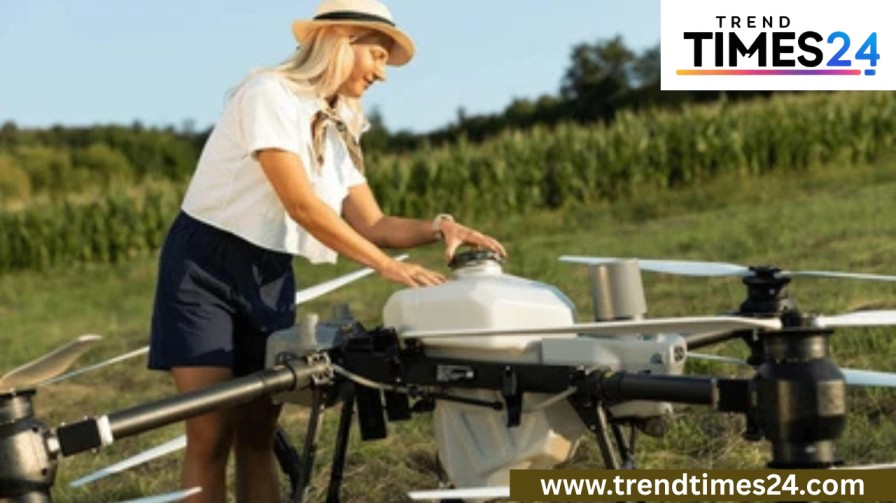
The Rise of Agricultural Drones in 2025
In 2025, agriculture is no longer confined to soil and seeds alone — it’s powered by artificial intelligence, data, and drones. The rise of agricultural drones has transformed traditional farming into smart, precision-based agriculture, helping farmers increase yield, save time, and reduce resource waste.
Across the globe — and particularly in India — farmers are embracing drone technology to overcome age-old challenges like unpredictable weather, pest attacks, and labor shortages.
1. What Are Agricultural Drones?
Agricultural drones, also known as Agri-Drones, are unmanned aerial vehicles (UAVs) designed to assist farmers in monitoring, analyzing, and managing crops and soil.
These drones are equipped with high-resolution cameras, sensors, and AI-powered software that help farmers make data-driven decisions about irrigation, spraying, and soil health.
In simple terms — they give farmers a bird’s-eye view of their fields, turning raw images into actionable insights.
2. Key Uses of Drone Technology in Agriculture
a. Crop Monitoring and Health Analysis
Agricultural drones scan vast areas in minutes, capturing detailed images that reveal crop health. Using multispectral and thermal sensors, drones detect:
-
Early signs of pest infestation or disease.
-
Areas suffering from nutrient deficiency.
-
Stressed zones due to over- or under-irrigation.
Farmers can act quickly — preventing loss and optimizing yield.

b. Precision Spraying and Fertilization
Drones equipped with spraying systems deliver pesticides, fertilizers, and herbicides with pinpoint accuracy.
This reduces chemical waste by up to 70%, saves manpower, and ensures even distribution — all while keeping farmers safe from direct exposure.
In India, the use of Agri-Drones under government-approved programs has significantly improved productivity in crops like rice, wheat, and sugarcane.
c. Soil and Field Analysis
Before sowing, drones can analyze soil texture, moisture, and nutrient levels. They generate 3D maps that help plan irrigation systems and planting patterns effectively.
This leads to smarter use of water, fertilizers, and energy — boosting overall farm efficiency.
d. Irrigation and Water Management
With thermal imaging, drones can detect dry patches in fields that might not be visible from the ground.
Farmers can then optimize irrigation schedules, conserve water, and prevent crop stress — a vital step in water-scarce regions.
e. Crop Damage Assessment and Insurance Claims
After storms, floods, or droughts, drones provide accurate aerial assessments of crop damage. This data helps insurance companies verify claims faster and ensures farmers receive fair compensation without delays.
3. Benefits of Using Drones in Agriculture
-
Time Efficiency: Drones can scan hundreds of acres within minutes.
-
Cost Reduction: Reduced chemical use and labor costs save money.
-
Higher Accuracy: AI analysis improves farm management decisions.
-
Sustainability: Encourages eco-friendly practices by minimizing waste.
-
Safety: Reduces human exposure to hazardous chemicals.
Drones have become the new-age tractors — not for plowing, but for planning and precision.
4. India’s Drone Revolution in Farming
India is emerging as one of the fastest-growing markets for agricultural drones. The government’s “Kisan Drone Yojana” and “Drone Shakti” initiatives are driving adoption among rural farmers.
Key highlights:
-
Subsidies on drone purchases for small and medium farmers.
-
Drone pilot training programs to empower rural youth.
-
Partnerships with startups developing India-made agricultural UAVs.
Agri-tech companies are now using drones integrated with AI, GPS, and IoT sensors to monitor large farmlands, especially in states like Punjab, Maharashtra, and Andhra Pradesh.
This shift aligns with India’s goal of achieving “Digital Agriculture” by 2030.
5. Global Trends and Future Innovations
Globally, agricultural drones are becoming smarter and more autonomous. The latest models in 2025 feature:
-
AI-driven decision-making to predict crop diseases before they spread.
-
Swarm technology, allowing multiple drones to work together efficiently.
-
Solar-powered drones that operate longer with minimal energy costs.
-
Seed-planting drones capable of sowing and reforesting vast areas.
As agriculture faces pressure to feed 9 billion people by 2050, drone technology is emerging as one of the most powerful tools to achieve food security and sustainability.

6. Challenges and the Road Ahead
While drones offer immense benefits, certain challenges remain:
-
High initial cost for small farmers.
-
Need for training and technical expertise.
-
Strict airspace and drone operation regulations.
However, as technology becomes cheaper and more accessible, drones will soon become as common as tractors in fields.
With the rise of AI integration and government support, the agricultural drone industry is expected to cross billions in market value by 2030.
Final Insight
Agricultural drones are not just flying machines — they are the eyes and intelligence of modern farming. They help farmers make faster, smarter, and more sustainable decisions, marking a new era in global agriculture.
For India and the world, 2025 stands as a turning point — where technology meets tradition, and where drones help farmers grow more with less.