
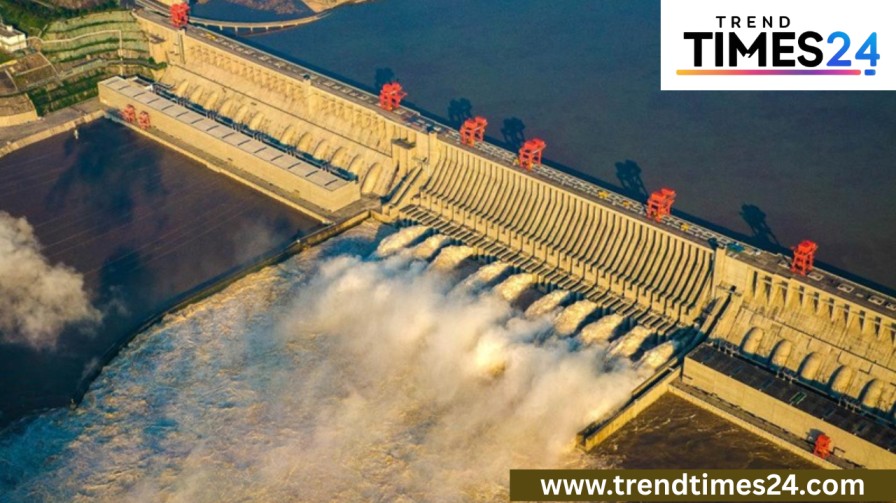
The Power Giant of the Yangtze River
The Three Gorges Dam, standing tall on China’s mighty Yangtze River, is one of the greatest engineering achievements in modern history. Completed in 2012 after nearly two decades of construction, this colossal project remains the largest hydroelectric power station in the world, both in scale and output.
In 2025, it continues to symbolize China’s technological ambition, renewable energy leadership, and its determination to balance industrial growth with sustainability.
Engineering Marvel of the Century
Located in Hubei Province, the Three Gorges Dam is a concrete gravity dam stretching over 2.3 kilometers in length and rising 185 meters in height. Behind it lies the Three Gorges Reservoir, which extends more than 600 kilometers upstream.
The dam has an installed capacity of 22,500 megawatts, powered by 32 massive turbines and two smaller generators. It produces over 100 billion kilowatt-hours of electricity annually — enough to power hundreds of millions of homes and reduce China’s coal consumption by tens of millions of tons each year.
Beyond energy, the dam was designed to serve multiple purposes: flood control, improved river navigation, and regional economic development.
How It Changed China’s Energy Landscape
Before the dam, China depended heavily on coal, which fueled its rapid growth but also its pollution crisis. The Three Gorges project was envisioned as a cleaner alternative — a foundation for a greener, energy-secure China.
-
Massive Clean Energy Output: The dam generates about 2% of China’s entire electricity supply, displacing millions of tons of carbon emissions annually.
-
Flood Protection: It protects downstream areas like Wuhan and Shanghai from devastating floods that once plagued the Yangtze basin.
-
River Navigation Boost: The waterway has become navigable for large cargo vessels, accelerating trade and regional connectivity.
Today, the dam remains a cornerstone in China’s goal of achieving carbon neutrality by 2060.
The Controversies and Costs
Despite its monumental success, the Three Gorges Dam has not escaped criticism. Environmentalists and human-rights groups have long questioned its social and ecological impact.
-
Mass Relocation: Over 1.3 million people were displaced to make way for the reservoir — one of the largest human relocations in modern times.
-
Ecological Changes: The dam altered river ecosystems, threatening fish species and disrupting sediment flow.
-
Geological Concerns: Scientists have raised alarms about landslides and micro-seismic activity in surrounding areas due to fluctuating reservoir levels.
The project stands as both an engineering triumph and an environmental cautionary tale — a reminder that human progress often comes at a price.
Global Impact and Strategic Importance
The Three Gorges Dam is not just a national project — it’s a global benchmark for hydropower innovation. Its technology, design, and management systems have inspired similar projects across Asia, Africa, and Latin America.
China’s experience has also positioned it as a global exporter of hydropower expertise, with Chinese firms now building dams in multiple developing countries.
Economically, the dam contributes billions to China’s energy grid each year. Strategically, it showcases how infrastructure can be a tool of soft power — combining technology, national pride, and renewable energy leadership.
Lessons for India and the World
For India, the Three Gorges Dam provides valuable insights. As India pursues ambitious renewable targets and invests in hydro projects in the Himalayas and Northeast, several lessons emerge:
-
Scale and Vision: The Three Gorges Dam demonstrates how long-term planning and national commitment can transform a country’s energy profile.
-
Environmental Balance: India can avoid the ecological pitfalls China faced by emphasizing environmental assessments and community inclusion.
-
Technology and Innovation: Advanced turbine systems, smart grid integration, and adaptive water management from China’s experience can inform India’s own river projects.
India’s hydro potential remains largely untapped — and learning from China’s journey can help create sustainable power solutions that balance energy security with environmental protection.
The Symbol of Modern China
The Three Gorges Dam remains more than a physical structure; it is a symbol of human ambition and engineering mastery. It embodies China’s rise from an industrial nation to a technological superpower capable of shaping its environment.
In 2025, as global temperatures rise and energy transitions accelerate, the dam stands as a monumental reminder: the future of clean energy lies in innovation, resilience, and responsibility.
the Three Gorges Dam tells a powerful story — of progress built on precision, ambition balanced by consequence, and a vision that continues to shape the 21st century.