
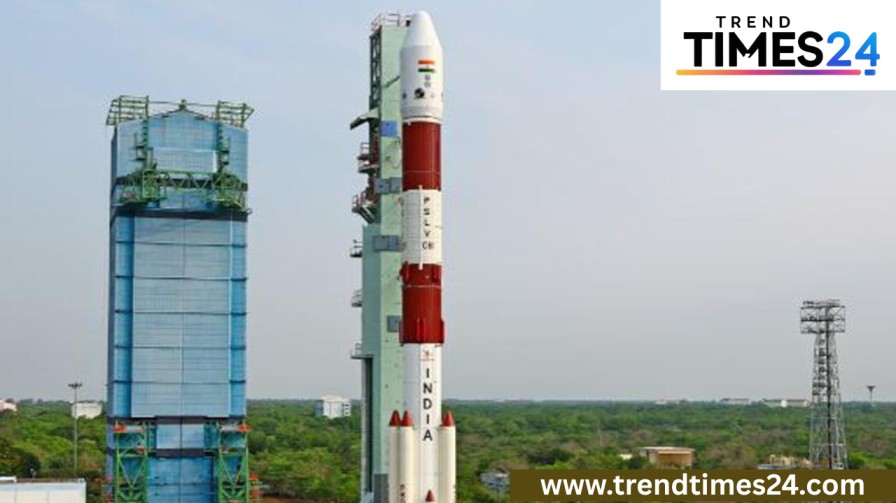
India’s space ambitions have reached a remarkable milestone. The Indian Space Research Organisation (ISRO) has officially confirmed its plan to build a national space station by 2035, with the first orbital module launching in 2027. This bold move marks India’s transition from a satellite and lunar mission powerhouse to a nation establishing a sustainable human presence in space.
The announcement was made by ISRO Chairman S. Somanath during the 14th convocation ceremony at IIT-BHU. He emphasized that India’s future in space extends far beyond rockets and satellites — it’s about building an ecosystem of innovation and discovery in orbit.
A New Era for India’s Space Program
After the resounding success of Chandrayaan-3, which made India the first country to land near the Moon’s south pole, ISRO has earned immense global respect for its cost-effective and high-precision missions. Now, the agency is preparing for the next phase of India’s space evolution — creating a modular, indigenous space station capable of supporting astronauts and long-duration missions.
“The Indian Space Station will symbolize India’s technological independence in space exploration,” said Somanath. “It will serve as a platform for microgravity research, innovation, and scientific collaboration.”
This marks a pivotal moment for India, positioning it alongside global powers like the United States, China, and Russia — all of whom have already developed or are working on their own orbital habitats.
Timeline: How ISRO Plans to Build the Space Station
ISRO has outlined a three-phase roadmap to achieve this ambitious goal:
Phase 1 (2027–2029):
Launch of the first orbital module using the LVM3 (Launch Vehicle Mark-III) rocket, India’s most powerful launcher to date. This module will demonstrate core systems and stability in low-Earth orbit.
Phase 2 (2030–2032):
Addition of laboratory and habitation modules, enabling limited-duration crewed missions and scientific experiments.
Phase 3 (2033–2035):
Completion of the Indian Space Station (ISS-India) — a fully operational facility designed to host astronauts for months at a time and conduct large-scale scientific research.
This gradual approach allows ISRO to validate new systems step by step, maintaining its hallmark strategy of affordability, efficiency, and reliability.
Scientific and Strategic Importance
The Indian Space Station is more than just a display of national pride. It represents a strategic investment in long-term scientific capability. Researchers will be able to conduct experiments in microgravity, studying materials science, biology, astronomy, and human physiology in space.
Moreover, it will act as the foundation for India’s future human spaceflight programs, following the Gaganyaan mission, which aims to send Indian astronauts into space aboard an indigenous spacecraft. The space station will serve as their permanent orbital outpost — a training and experimentation ground for future interplanetary missions.
Economically, the project will fuel India’s private space ecosystem, especially through IN-SPACe (Indian National Space Promotion and Authorization Centre), which supports startups in aerospace, robotics, and space hardware manufacturing.
Global Collaboration and Competition
India’s move to establish its own orbital platform comes at a time when the global race for space infrastructure is heating up. The United States and partners operate the International Space Station (ISS), while China has already completed its Tiangong Space Station. Russia and Japan have also outlined plans for independent orbital facilities.
By 2035, India aims to join this elite group, reaffirming its commitment to peaceful, scientific, and sustainable space exploration. Analysts believe India’s low-cost innovation model could make it a preferred partner for developing nations that wish to participate in space research without massive budgets.
“India’s entry into manned orbital infrastructure marks a new balance in global space leadership,” said Dr. Arvind Rao, a space policy analyst. “It gives emerging countries a chance to collaborate with a reliable and resource-efficient partner.”
Key Technologies Driving the Mission
ISRO is already developing a range of cutting-edge technologies to support the 2035 vision:
-
Reusable Launch Vehicles (RLV): To reduce mission costs and enhance launch frequency.
-
Automated Docking Systems: For smooth connection between modules and spacecraft.
-
Life Support and Environmental Control Systems: Ensuring astronaut health and safety during long missions.
-
Space Robotics and Automation: For maintenance, assembly, and in-orbit repairs.
-
Nuclear and Solar Hybrid Power Systems: Providing reliable, continuous energy for onboard experiments.
Each of these innovations not only powers the space station mission but also strengthens India’s broader space technology ecosystem, reinforcing its global competitiveness in satellite services, navigation, and deep-space missions.
Economic, Educational, and Societal Impact
Beyond science and technology, the Indian Space Station will inspire millions of young Indians to pursue STEM education and careers in aerospace. Universities and research institutes across India are already working with ISRO to design microgravity experiments and payload modules for future missions.
From an economic standpoint, this project could boost India’s space economy to $40 billion by 2040, generating thousands of new jobs in manufacturing, R&D, and software engineering. It will also attract foreign investment in commercial launch services and orbital research partnerships.
Furthermore, India’s space presence could accelerate advances in climate monitoring, telecommunications, disaster management, and defense applications, ensuring that space innovation benefits everyday life on Earth.
Conclusion: A New Dawn for India’s Space Future
India’s decision to build its own space station by 2035 marks a historic leap in its journey toward global space leadership. What began with the Aryabhata satellite in 1975 has now evolved into a mission to establish a permanent human presence in orbit.
This initiative showcases ISRO’s unwavering commitment to innovation, independence, and inclusivity in space exploration. As the world moves toward a new age of interplanetary missions and orbital sustainability, India stands ready to lead the next chapter of humanity’s journey beyond Earth.