
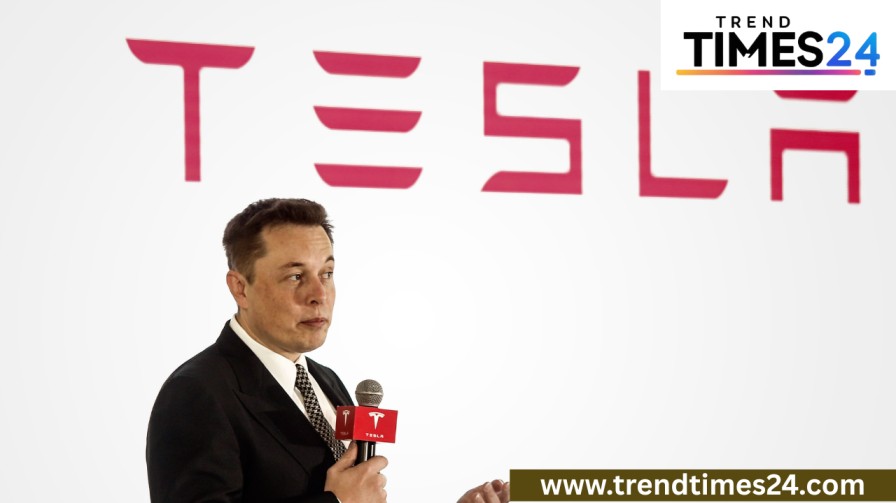
After months of speculation, Elon Musk has officially confirmed that xAI, his artificial intelligence company, is moving into the gaming and robotics sector. The project centers around World Models, a breakthrough AI framework that allows machines to learn by simulating and interacting with virtual environments—just like humans.
This announcement has ignited excitement across both the gaming and AI communities, signaling the beginning of a new era in immersive simulation, autonomous robotics, and real-world AI training. As the boundaries between entertainment, automation, and artificial intelligence blur, Tesla and xAI are positioning themselves to redefine what AI can do.
What Are World Models and Why They Matter
The concept of World Models isn’t entirely new—it’s been an area of research in AI for several years—but Musk’s xAI is taking it to an unprecedented scale. In simple terms, a World Model allows an AI system to build an internal understanding of the world around it, learning cause-and-effect relationships through observation and simulation.
For example, instead of learning every possible action through trial and error, the AI can simulate outcomes internally before acting in the real world. This drastically speeds up learning and makes the AI more adaptable to unpredictable environments.
Musk explained that xAI’s World Models are designed to bridge human-like reasoning and machine efficiency, enabling AI to not only predict but also imagine and plan future scenarios. This technology is expected to power next-generation Tesla robots, autonomous vehicles, and now—advanced AI-powered gaming systems.
xAI’s Entry into Gaming
According to reports, xAI is collaborating with developers to create AI-driven game environments that evolve dynamically, responding intelligently to player behavior. These games won’t rely on pre-scripted NPCs (non-player characters); instead, they’ll feature AI agents that think, adapt, and interact in lifelike ways.
Imagine playing a game where every character learns from your choices, the environment changes based on your actions, and storylines are generated in real-time by an AI capable of understanding emotion, strategy, and motivation.
Industry experts believe this could mark the biggest shift in gaming since the introduction of real-time physics engines or 3D graphics. It’s not just about realism—it’s about intelligence within the game world itself.
Integration with Tesla and Robotics
Beyond gaming, the implications for Tesla’s robotics division are even more significant. World Models will play a central role in training Tesla’s Optimus robot and the company’s autonomous driving systems.
By using virtual environments built with gaming-grade engines like Unreal or Unity, Tesla’s AI can train millions of scenarios per second—everything from object recognition to complex decision-making—without requiring real-world testing.
This means faster, safer, and more efficient AI development for Tesla’s vehicles and robots. It also hints at a future where Tesla and xAI share a unified simulation platform, allowing AI models trained in virtual gaming worlds to operate in the physical world with minimal retraining.
The Vision: One AI for All Worlds
Musk’s broader vision is to create a single AI architecture capable of functioning across multiple domains—virtual and physical alike. The same system that controls an NPC in a game could, theoretically, pilot a Tesla or assist in robotic surgery.
In Musk’s own words, “The goal of xAI is to build an AI that understands the universe.” World Models are the key to that vision, allowing AI to gain deep contextual awareness of physics, social interactions, and human behavior.
This cross-domain intelligence could revolutionize industries like gaming, healthcare, logistics, and manufacturing. The more an AI understands simulated worlds, the better it can navigate real ones.
Industry Reactions and Future Potential
The gaming industry has responded with enthusiasm—and a hint of concern. Developers are excited about new storytelling and gameplay possibilities, while others worry about automation replacing human creativity.
Game designers see opportunities for AI-driven creativity, where writers and developers can collaborate with generative AI tools to build vast, adaptive universes. Meanwhile, robotics experts predict that xAI’s innovations could lead to AI systems that learn faster than ever, reducing dependence on massive datasets and expensive real-world testing.
Analysts say Musk’s move could also challenge OpenAI, DeepMind, and Nvidia in the race for the most powerful AI ecosystem. With Tesla’s hardware advantage and real-world data, xAI’s World Models could become the foundation of general-purpose intelligence—AI that can truly think and adapt across disciplines.
Challenges Ahead
Despite the hype, there are challenges. Building reliable World Models requires massive computing power and accurate simulation data. Ensuring ethical AI behavior in open-ended gaming environments will also be a major hurdle.
Privacy advocates are watching closely, as integrating gaming data with real-world robotics systems raises questions about user data usage and consent. However, Musk has stated that xAI’s mission includes prioritizing transparency and safety, emphasizing responsible AI development.
Conclusion
With xAI’s entry into gaming, Elon Musk is once again challenging the boundaries of innovation. Tesla’s World Models AI could redefine not only how we play games but how machines learn, think, and interact with the real world.
From smarter robots to lifelike NPCs and immersive virtual universes, the convergence of gaming and AI marks the start of a new technological frontier. Whether you’re a gamer, developer, or tech enthusiast, one thing is certain—the future of AI won’t just be seen in labs or factories; it will be played, explored, and experienced.