
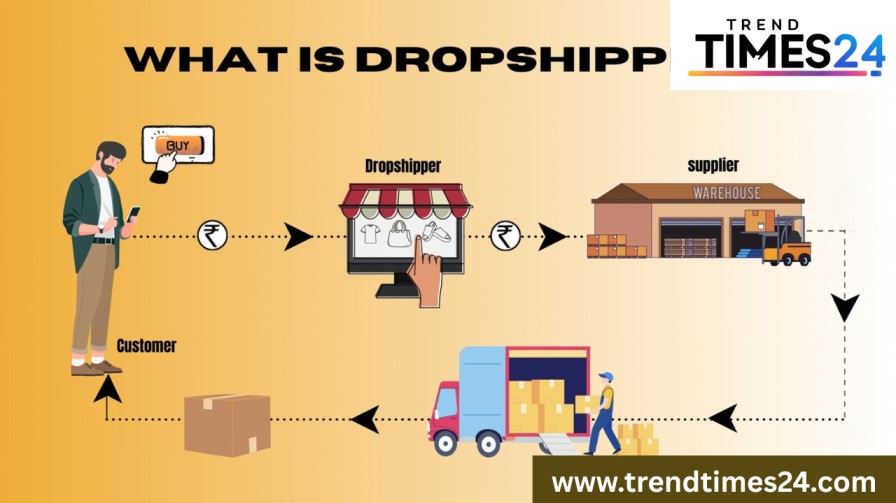
Dropshipping has become one of the most popular and practical business ideas for people who want to start earning online from home. Unlike traditional retail businesses, dropshipping allows you to sell products without storing inventory or handling shipping. This makes it an attractive option for beginners who want to enter ecommerce with low risk and minimal upfront investment.
At its core, dropshipping is an ecommerce model where you act as the middleman between customers and suppliers. You create an online store and list products for sale. When a customer places an order, the supplier ships the product directly to the customer. You earn profit from the difference between the retail price and the supplier cost. This simple structure removes many of the traditional barriers to starting a business.
One of the biggest advantages of a dropshipping business from home is low startup cost. You do not need to purchase products in bulk, rent warehouse space, or manage physical stock. This significantly reduces financial risk. Many people start dropshipping businesses with only basic expenses such as website hosting, marketing, and tools.
Dropshipping also offers flexibility. You can run the business entirely from home using a laptop and internet connection. Orders, customer communication, and marketing can all be managed remotely. This flexibility allows you to work from anywhere and set your own schedule, making it ideal for students, professionals, and aspiring entrepreneurs.
Another major benefit of dropshipping is product variety. You are not limited to a single product category. You can test different products, niches, and trends without financial loss from unsold inventory. This ability to experiment allows you to adapt quickly to market demand and consumer behavior.
The global reach of dropshipping is another strong advantage. You are not limited to selling locally. With the right suppliers and shipping solutions, you can sell products to customers around the world. This expands your market size and income potential significantly.
Choosing the right niche is critical for dropshipping success. Rather than selling random products, successful dropshippers focus on specific niches such as fitness accessories, home decor, pet products, beauty tools, or lifestyle items. A clear niche helps with branding, marketing, and customer trust. Customers are more likely to buy from stores that appear specialized rather than generic.
Marketing plays a central role in dropshipping. Since you do not rely on physical stores, online marketing becomes your primary growth driver. This includes social media marketing, influencer collaborations, content marketing, email campaigns, and paid advertising. Strong marketing strategies help attract targeted customers and increase conversions.
Customer experience is equally important. Although suppliers handle shipping, you are responsible for customer communication. This includes answering questions, handling complaints, and managing returns. Building trust through transparency, clear policies, and responsive support improves customer satisfaction and repeat purchases.
Dropshipping is also highly scalable. Once your systems are set up, handling more orders does not require significantly more effort. Automation tools can manage order fulfillment, tracking, and inventory updates. This allows you to focus on growth, branding, and optimization rather than daily operations.
Branding is a key factor that separates successful dropshipping businesses from short lived ones. Creating a strong brand identity, professional website, and consistent messaging builds credibility. Customers trust brands more than anonymous stores. Long term success comes from building a brand rather than chasing short term trends.
Technology has made dropshipping easier than ever. Ecommerce platforms, automation tools, analytics software, and marketing integrations simplify operations. Entrepreneurs who leverage technology efficiently gain a competitive advantage and improve profitability.
Challenges do exist in dropshipping. Shipping delays, supplier reliability, competition, and thin margins can be obstacles. However, these challenges can be managed through proper supplier selection, clear communication, niche targeting, and value driven branding. Dropshipping rewards patience and strategic thinking rather than quick shortcuts.
From a learning perspective, dropshipping builds valuable skills. Entrepreneurs gain experience in ecommerce, digital marketing, customer psychology, analytics, and brand management. These skills are transferable to other online businesses and future ventures.
Dropshipping can also serve as a stepping stone to larger ecommerce models. Many entrepreneurs start with dropshipping and later move into private labeling, custom products, or full scale online brands. This progression allows gradual growth without heavy risk.
Another advantage of dropshipping is independence. You are not tied to fixed working hours or locations. Income potential grows with effort, learning, and optimization rather than time spent. This gives entrepreneurs more control over their financial future.
In the long term, dropshipping can become a sustainable business if approached with the right mindset. Success comes from understanding customers, providing value, and building trust. Those who focus on quality products, strong branding, and excellent service stand out in competitive markets.
In conclusion, a dropshipping business from home offers a powerful opportunity to enter ecommerce with low investment and global reach. While it requires learning, consistency, and patience, the rewards can be significant. With proper niche selection, strategic marketing, and customer focused operations, dropshipping can grow into a profitable and scalable home based business that provides long term income and independence.