
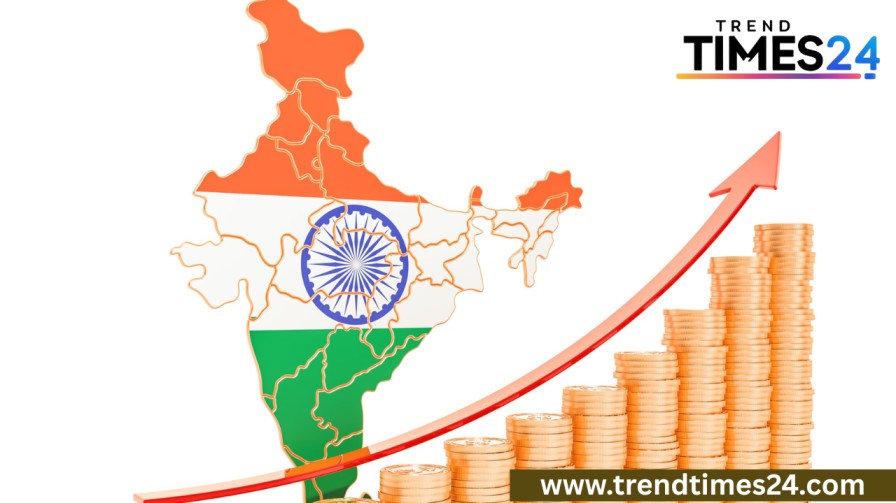
In a historic shift in global economics, India has overtaken Japan to become the world’s third-largest economy. This landmark achievement, confirmed by new international data, cements India’s position as a major force in global finance and development. With a growing industrial base, strong digital infrastructure, and a young workforce, India’s rise reflects decades of consistent reform and strategic planning.
India’s Economic Transformation
India’s journey from a developing nation to an economic powerhouse has been marked by steady progress across multiple sectors. Over the past decade, reforms in taxation, digitization, and trade have reshaped the country’s business landscape. The government’s “Make in India” initiative and strong investment in infrastructure have boosted domestic manufacturing and exports.
In 2025, India’s GDP crossed $5.2 trillion, surpassing Japan’s estimated $4.9 trillion output. Analysts credit the shift to India’s robust consumption patterns, digital innovation, and rising export capacity. Global firms have been pouring investments into Indian markets, viewing the country as a stable and promising alternative to traditional Asian manufacturing hubs.
Drivers Behind the Growth
Several key factors have fueled India’s economic surge. First, the expansion of the technology sector has turned India into a global hub for innovation and services. Companies in IT, artificial intelligence, and fintech have transformed the economy’s backbone.
Second, India’s manufacturing base has grown rapidly, supported by initiatives such as “Production Linked Incentives” (PLI). These schemes have attracted global players in electronics, electric vehicles, and semiconductors. Third, rising foreign direct investment (FDI) and a focus on renewable energy have diversified the economy and reduced dependence on imports.
Demographic strength is another major advantage. With an average age of 29, India has one of the world’s youngest workforces. This demographic dividend fuels consumption and productivity, driving domestic demand and economic resilience.
Global Reaction and Economic Impact
The world has taken note of India’s milestone achievement. Global media have hailed India as the “new engine of Asian growth,” while economists predict that India could surpass the United States by 2050 if growth continues at this pace. International investors are now shifting focus from China to India, citing its transparent governance, growing middle class, and digital transformation.
Japan’s economy, by contrast, has been weighed down by an aging population and stagnant growth. While Japan remains an advanced economy with high per-capita income, India’s rapid scale and potential are redefining Asia’s power balance. The shift underscores a larger global trend: economic momentum is moving south and east, with Asia emerging as the dominant growth hub.
Policy Reforms and Future Targets
India’s recent reforms have strengthened fiscal stability and improved investor confidence. The rollout of the Goods and Services Tax (GST), digital banking systems like UPI, and corporate tax reductions have created a dynamic business ecosystem. India’s focus on sustainability through solar energy, green mobility, and infrastructure modernization is also attracting global praise.
Economists project that India’s economy could reach $7 trillion by 2030, making it the fastest-growing major economy in the world. The International Monetary Fund (IMF) expects India’s GDP growth rate to average 6.8% over the next five years — far higher than most developed nations.
India’s growing digital economy adds to its strength. With over 900 million internet users, the country is seeing unprecedented growth in e-commerce, digital finance, and online education. This digital inclusion is fueling entrepreneurship and creating new opportunities across urban and rural areas.
India’s Context and Global Positioning
India’s rise also reflects its strategic balance in international relations. As a member of the G20 and a major partner in global supply chains, India is redefining trade and technology diplomacy. Its partnerships with the United States, Japan, and Europe have deepened, while its role in regional alliances such as BRICS continues to expand.
From a cultural perspective, India’s ascent symbolizes confidence and self-reliance. It showcases how a democracy with a young population and diverse economy can compete globally without compromising on sustainability or inclusivity. This achievement has been celebrated across India as a collective success of policy, innovation, and people.
Challenges Ahead
Despite the celebration, India still faces challenges. Income inequality, unemployment, and rural development remain areas of concern. To sustain momentum, the country must continue investing in education, health care, and infrastructure. Balancing rapid industrialization with environmental responsibility will be critical to long-term stability.
Experts also caution against over-dependence on global capital flows. Ensuring domestic innovation, rural inclusion, and economic diversity will help India maintain resilience during global downturns. Policymakers aim to make India not only the world’s third-largest economy but also one of the most equitable and sustainable.
A Moment of National Pride
For India, this milestone is more than just an economic ranking. It represents the culmination of decades of ambition, resilience, and reform. It demonstrates how the world’s largest democracy can achieve prosperity while preserving social harmony and openness.
As the global spotlight turns to India, the country’s success story inspires developing nations worldwide. Trend Times 24 celebrates this achievement as a defining moment in modern history — proof that determination, vision, and unity can reshape the global economic order.