
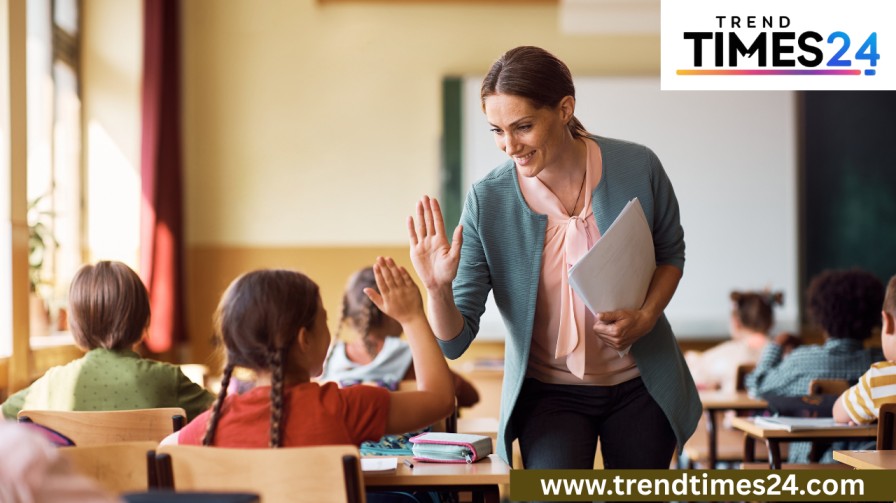
Introduction: The Heart of Education
Education is more than textbooks — it’s about shaping minds, building character, and nurturing emotional well-being.
In today’s world, where technology and pressure dominate student life, the teacher’s role extends far beyond academics.
How a teacher treats children can define how they see themselves, others, and the world.
As Trend Times 24 explores, 2025 calls for a new kind of educator — one who teaches with empathy, fairness, and respect.
1. Treat Every Child with Equal Respect
Respect is the foundation of trust.
Every child, regardless of background, talent, or personality, deserves equal respect in the classroom.
When teachers show fairness and avoid favoritism, students feel valued and motivated.
Respect builds discipline naturally — not through fear, but through mutual understanding.

2. Encourage, Don’t Embarrass
Publicly criticizing or comparing students can deeply affect their confidence.
Instead of pointing out weaknesses, teachers should focus on effort, not perfection.
Praise progress, even small improvements.
Encouragement transforms fear into curiosity, helping children enjoy learning rather than dreading it.
3. Listen More, Speak with Care
Great teachers don’t just teach — they listen.
Children often express emotions through behavior, not words.
A student who is quiet or distracted might be struggling emotionally.
Taking a few minutes to listen with compassion can make a world of difference.
In 2025’s emotionally aware classrooms, listening is as important as lecturing.
4. Create a Safe Space for Questions
Students learn best when they feel safe to ask questions — without fear of judgment.
Teachers should create an atmosphere where curiosity is rewarded, not ridiculed.
A child who feels safe to express ideas develops stronger problem-solving skills and lifelong confidence.
Encouraging “Why?” is the mark of a truly modern classroom.

5. Balance Discipline with Empathy
Discipline is essential, but it must be humane.
Children respond better to understanding than punishment.
Instead of scolding, explain consequences calmly and help them reflect on behavior.
Teaching emotional responsibility builds maturity — far more than fear ever could.
6. Celebrate Individuality
Every child learns differently — some through visuals, others through doing or listening.
A good teacher adapts, not forces.
Recognizing individuality helps children discover their strengths early.
In inclusive classrooms, diversity isn’t a challenge — it’s a strength.
7. Encourage Creativity and Freedom
The world of 2025 demands thinkers, not memorisers.
Teachers should allow students to explore creativity — through art, storytelling, debates, and problem-solving.
When students are free to express themselves, they develop confidence and emotional intelligence alongside knowledge.
8. Protect Emotional Well-Being
Mental health in schools is now a global priority.
Teachers are often the first to notice when a child is anxious, withdrawn, or overwhelmed.
By maintaining empathy and open communication, teachers can become the first line of emotional support — connecting students with counselors when needed.

9. Lead by Example
Children imitate what they see more than what they’re told.
A respectful, patient, and honest teacher creates an environment where students naturally mirror the same values.
In the digital era, emotional intelligence is just as vital as intellectual intelligence — and teachers must embody both.
10. Partner with Parents, Not Against Them
A child’s success depends on collaboration between school and home.
Teachers should maintain open communication with parents, sharing both achievements and challenges constructively.
When parents and teachers work as allies, children feel supported from all sides.
Final Insight
How a teacher treats a child today shapes the kind of adult they’ll become tomorrow.
Education is not just about passing exams — it’s about building empathy, resilience, and confidence.
In every great teacher, there’s a balance of kindness and authority, patience and passion.
The classrooms of 2025 must reflect this truth: children learn best from teachers who see them not just as students, but as human beings with limitless potential.
— Trend Times 24: Your 24-hour window to the world.