
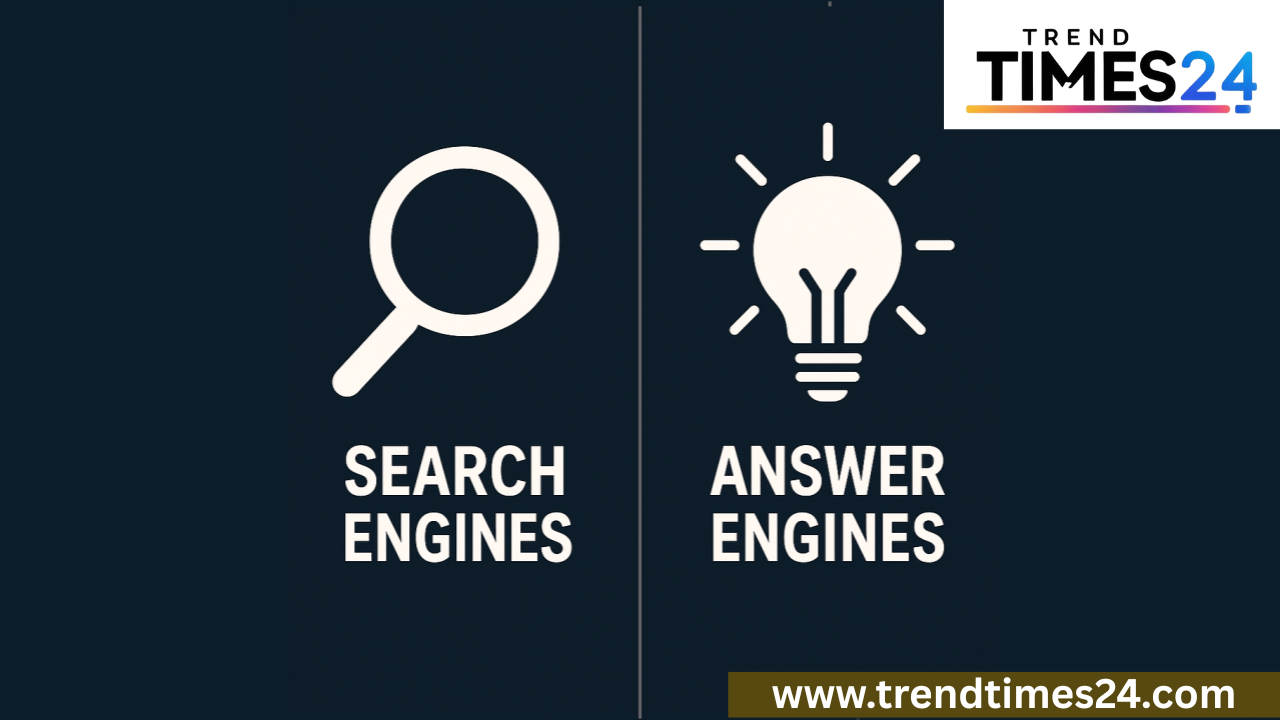
For two decades, Google defined how we searched the web. You typed a query, scrolled through blue links, and hoped for the best. But that era is changing. The new generation of AI-powered tools — called Answer Engines — are redefining what search means entirely.
Instead of showing a list of results, answer engines understand intent and deliver direct, human-like answers instantly. They don’t just find information — they explain it, summarize it, and personalize it.
1. What Exactly Are Answer Engines?
Answer engines are advanced search systems powered by Artificial Intelligence and Natural Language Processing (NLP). They don’t rely only on keyword matching — they use context, meaning, and tone to generate conversational responses.
Unlike search engines that index billions of pages, answer engines like ChatGPT, Gemini, Claude, and Perplexity AI process vast datasets and summarize the best insights in seconds. Think of them as your personal research assistant rather than a directory.
2. How AI Search Changes the Way We Discover Information
Traditional search requires scrolling through multiple pages, ads, and SEO battles. AI search flips that model — it summarizes results instantly. Users now prefer one intelligent response over 10 web links. According to tech analysts, over 60% of Gen Z users already use chatbots for quick information before Google.
This shift marks the beginning of a new internet era — from “searching” to “conversing.” Instead of asking “what is,” we now ask “explain why.” The discovery experience is no longer about data; it’s about dialogue.
3. The Rise of Chat-Based Search Platforms
Several companies are racing to dominate AI search:
- ChatGPT + GPT Search: Offers conversational results that feel like talking to a human expert.
- Perplexity AI: Merges web browsing and AI summarization for trusted sources and citations.
- Google Gemini: Integrates AI reasoning directly into search results for context-aware discovery.
- Microsoft Copilot: Powers Bing’s new AI-driven exploration with productivity and search combined.
Each of these tools is reshaping user expectations. The next generation doesn’t want to “look things up” — they want answers, insights, and clarity in seconds.
4. How This Impacts SEO & Content Creation
For content creators, this shift is revolutionary. SEO is no longer just about keywords — it’s about context, structure, and authority. AI search engines prioritize factual accuracy, clear formatting, and semantic richness. This means your content must answer questions directly, not just mention them.
High-performing pages now use “people also ask” logic — direct headings, structured paragraphs, and trustworthy sources. The web is evolving into a knowledge-first ecosystem.
5. The Technology Behind the Magic
Answer engines run on Large Language Models (LLMs) trained on trillions of data points. These systems learn grammar, logic, reasoning, and factual data through reinforcement and real-time user feedback. Unlike Google’s index, which is static, AI models can adapt and learn continuously.
They use machine learning to predict context and provide answers that feel natural. Some even tailor tone — casual for everyday users, technical for professionals. It’s personalization at a global scale.
6. Benefits of AI Search Over Traditional Search
- Speed: Instant summaries and insights without ads or clutter.
- Accuracy: Sources verified and simplified through AI filtering.
- Personalization: Answers adapt to user style and goals.
- Accessibility: Conversational responses for all literacy levels.
In essence, answer engines combine the power of data and empathy — they don’t just retrieve; they relate.
7. The Future of Business, SEO & AI Discovery
Brands must adapt fast. AI search will soon become the front door of the internet. Instead of optimizing for “Google ranking,” businesses will optimize for “AI visibility.” That means creating content structured for summarization — bullet lists, FAQ sections, and evidence-backed writing.
Experts predict that within a few years, most web traffic will flow through AI intermediaries instead of search engines. Businesses that publish trustworthy, semantically rich, human content will win this new game.
8. Challenges & Ethical Questions
AI search brings innovation — but also complexity. Bias, misinformation, and over-dependence on AI are major risks. Answer engines must balance convenience with credibility. Transparency — citing sources and explaining reasoning — is key to maintaining user trust.
Governments and developers are already creating AI transparency frameworks to ensure responsible discovery experiences that benefit all users.
Conclusion: From Search to Understanding
Answer engines are not replacing humans — they’re upgrading how we think and explore. The future of online discovery isn’t just about finding facts; it’s about understanding meaning. AI-driven search tools are transforming the internet into an intelligent conversation — one that listens, learns, and answers with intent.
As we move deeper into this AI-powered age, one truth remains clear: the smarter our tools become, the more human our curiosity must stay.