
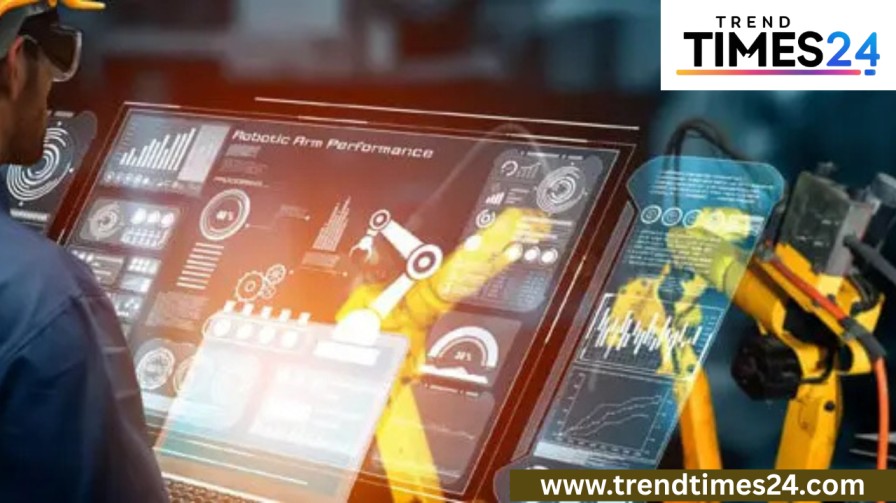
In the age of Industry 4.0, Operational Technology (OT) has evolved from isolated machinery controls into a vast, interconnected ecosystem driving global industries. While this digital transformation improves efficiency, productivity, and real-time monitoring, it also exposes OT systems to an unprecedented wave of cyber threats. The convergence of IT and OT has blurred traditional boundaries, creating a critical cybersecurity challenge for governments and enterprises alike.
What Is Operational Technology?
Operational Technology refers to the hardware and software used to monitor and control physical devices, industrial systems, and processes. Examples include Supervisory Control and Data Acquisition (SCADA) systems, Programmable Logic Controllers (PLCs), and Industrial Control Systems (ICS). These technologies run essential operations in power grids, manufacturing plants, oil refineries, and transportation networks.
Unlike traditional IT environments that focus on data confidentiality and integrity, OT systems prioritize availability and safety. A single disruption can halt production, damage equipment, or endanger human life. This makes OT cybersecurity not just a digital issue, but a matter of physical and economic stability.
The Growing Cyber Threat to OT Systems
As industrial systems become smarter and more connected, their exposure to cyberattacks rises sharply. Once air-gapped and isolated, many OT systems are now linked to enterprise IT networks and the cloud to enable remote management, analytics, and predictive maintenance. Unfortunately, this integration often happens without adequate security controls.
Cyber-intelligence reports indicate that OT cyber incidents increased by over 50 percent between 2023 and 2025. Attackers target weak authentication, unpatched legacy systems, and misconfigured remote access gateways. Common threat vectors include:
-
Ransomware: Encrypting or disabling control systems to demand payment.
-
Supply-chain attacks: Compromising trusted third-party software or hardware vendors.
-
Credential theft and phishing: Exploiting employees who access both IT and OT networks.
-
Insider threats: Malicious or careless operators introducing malware into critical systems.
Notable incidents—such as the Colonial Pipeline ransomware attack—demonstrate how a breach in IT can cascade into OT, disrupting fuel supply chains and causing national panic. With industrial operations now digitized, even a minor vulnerability can have far-reaching real-world consequences.

Why OT Security Lags Behind
One of the biggest challenges in OT security is the reliance on legacy systems. Many machines were designed decades ago with little or no cybersecurity capability. Patching or upgrading them can be risky, as downtime is often unacceptable. Additionally, OT uses specialized protocols (Modbus, DNP3, OPC UA) that standard IT security tools struggle to monitor effectively.
Organizational silos worsen the problem. IT teams focus on data protection, while OT engineers emphasize uptime. Without cross-departmental collaboration, blind spots remain. The result is a fragile ecosystem where operational continuity often outweighs cybersecurity readiness.
Strategies to Protect Operational Technology
To strengthen defenses, organizations must adopt a holistic OT cybersecurity framework combining technology, policy, and culture:
-
Network segmentation: Isolate OT systems from IT networks and use strict access controls.
-
Zero-trust model: Verify every user, device, and connection—never assume trust.
-
Continuous monitoring: Deploy intrusion-detection tools tailored for OT protocols.
-
Patch management: Regularly update systems where possible; otherwise, use virtual patching.
-
Incident response planning: Establish protocols for containment and recovery in case of attack.
-
Employee awareness: Train engineers and operators to recognize phishing and social-engineering attempts.
Public-private collaboration also matters. Global frameworks such as NIST SP 800-82 and IEC 62443 provide guidance on securing industrial control systems, while government initiatives promote threat-intelligence sharing among critical-infrastructure operators.
The Future of OT Cybersecurity
As industries embrace automation, artificial intelligence, and edge computing, OT environments will only become more interconnected—and therefore more vulnerable. The next phase of security will depend on AI-driven monitoring, digital twins, and predictive analytics that can detect anomalies before they cause damage.
Organizations that treat OT security as a strategic priority rather than a compliance checkbox will be better equipped to survive and thrive in this era of connected industry. In the digital economy, protecting operational technology means protecting productivity, safety, and national resilience.