
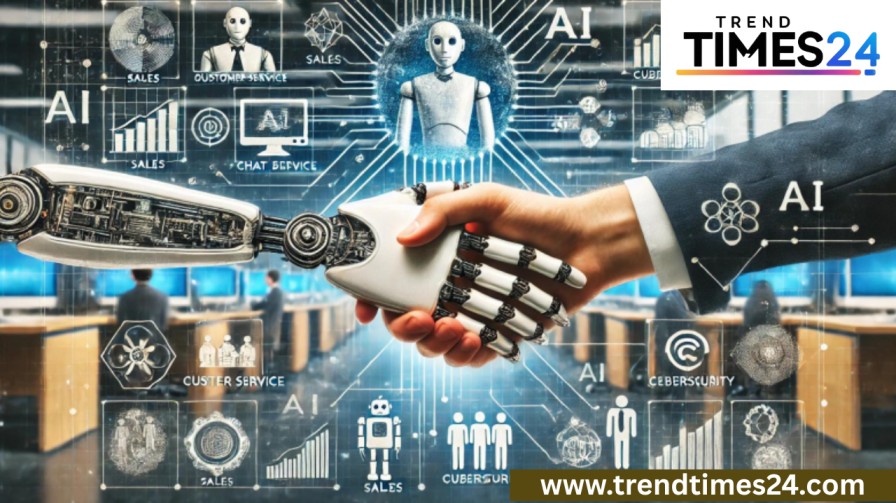
Impact of Artificial Intelligence on India’s Job Market: Opportunities and Challenges
Artificial Intelligence is transforming India’s job market faster than ever before. From information technology and finance to healthcare and manufacturing, every industry is feeling its impact. As India positions itself as a global technology hub, understanding the impact of Artificial Intelligence on India’s job market has become essential for professionals, students, and decision-makers.

The Rise of AI in India’s Economy
AI adoption has grown rapidly in recent years. Businesses across the country are using artificial intelligence for data analysis, automation, and improving customer experience. According to recent reports, India’s AI market could reach 17 billion dollars by 2027. This growth is creating new job opportunities for developers, engineers, and analysts specializing in AI and machine learning.
At the same time, automation is reducing repetitive and routine jobs. Tasks in data entry, assembly lines, and customer support are increasingly being handled by intelligent systems. This trend highlights the importance of developing new skills and focusing on education that matches the changing employment landscape.
AI-Driven Opportunities and Skill Demand
The positive side of this transformation lies in the rise of entirely new professions. Organizations are hiring AI engineers, robotic process automation specialists, and data scientists. These roles offer higher salaries, better career stability, and greater demand across industries.
Traditional job profiles are also changing. Marketing professionals are now using AI tools for targeted campaigns, while doctors rely on AI-based diagnostics to provide faster and more accurate results. The combination of human expertise and advanced technology is creating a hybrid work model that improves productivity and decision-making.
To keep up, educational institutions are introducing specialized programs focused on AI, data science, and automation. The National Education Policy 2020 has emphasized digital literacy and technical skills, preparing young Indians for future-ready careers.
Challenges of Automation and Job Displacement
Despite the advantages, automation has raised concerns about job displacement. Low-skilled workers, especially in sectors like manufacturing and administration, are more vulnerable to job loss. Studies indicate that around nine percent of India’s workforce could be affected by AI and automation by 2030.

However, this challenge also presents an opportunity. With proper reskilling programs, India can turn this disruption into a competitive advantage. Initiatives like Digital India and Skill India aim to prepare millions of workers with the skills needed in an AI-driven economy. Many private companies are also investing in upskilling their employees to bridge the gap between human talent and machine intelligence.
India’s Context: Balancing Growth and Inclusion
India’s young population is a major advantage in the age of AI. More than sixty-five percent of Indians are under the age of thirty-five, providing a large and energetic workforce capable of adapting to technological change. Startups in Bengaluru, Hyderabad, and Pune are already using AI to solve real-world problems such as improving healthcare access, enhancing agricultural output, and expanding financial inclusion.
While these advancements are promising, they also highlight the need for inclusive growth. Rural regions may face higher risks of automation-related job loss. Expanding access to digital education, affordable internet, and technical training in smaller cities and villages will ensure that the benefits of AI reach every part of the country.
The Future of Work in an AI-Driven India
The impact of Artificial Intelligence on India’s job market is both challenging and full of opportunity. The country stands at a crucial turning point. As AI continues to evolve, adaptability and continuous learning will become the most valuable skills for workers in every field.
India can lead the global AI revolution by combining innovation with human creativity. With the right mix of policy support, industry collaboration, and education, the nation can create millions of new AI-powered jobs while protecting existing employment opportunities. As highlighted by Trend Times 24, the future of India’s workforce depends on embracing change and preparing for a technology-driven tomorrow.